Music
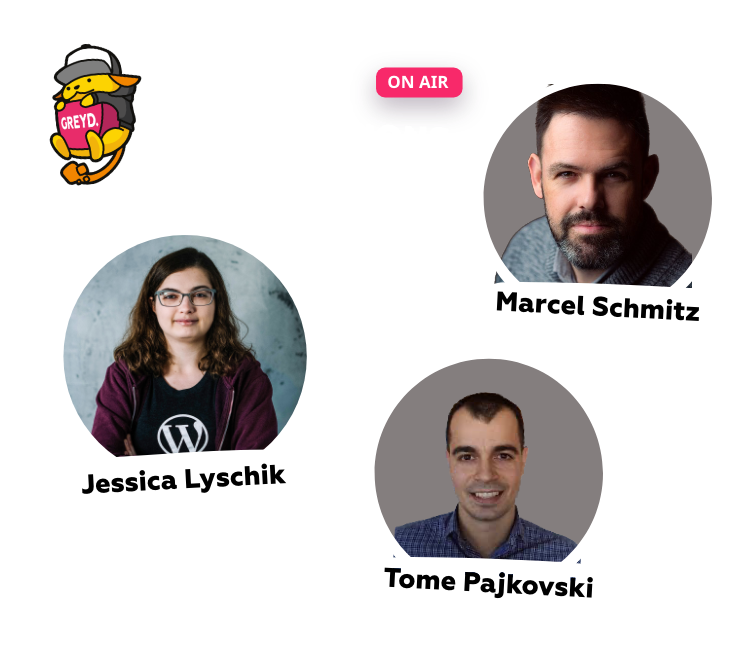
Jessica: Hey everyone, and welcome to another episode of Greyd Conversations. We are on episode 14 and today I am joined by two Codeable experts who are Marcel Schmitz and Tome Pajkovski. Hi, guys.
Tome&Marcel: Hi there.
Jessica: And today’s our topic, modern WordPress architecture. What agencies should actually care about. So it’s a rather broad topic. But we will cover a few things. And, I think having two Codeable experts who can or who on a day to day basis, look into, various projects from different agencies and clients. I think we have two amazing guests that can share about their experiences. So, Marcel, would you like to start introducing yourself?
Marcel: Yes. Thank you very much. Yeah. My name is Marcel. I am based in Porto, Portugal. I’ve been doing web development generally since 1998, so it’s been a long time. I’ve been doing WordPress for, 15, 14 years. My main focus at the moment is WooCommerce specific, website, but also at the same time, I’ve been working for enterprise clients, in the area of performance. And I’m also very active in the, Gutenberg side of things, of WordPress, building custom box and built and custom plugins for, a bunch of, different clients. And this is basically what I’ve been doing. And, and also basically diving very much into the AI things that are lately exploding around us. And so the topic that we’re going to talk about today is actually very, very interesting.
There’s a lot to say about a lot of choices were being making lately. And, yeah, I’m just looking very much forward to it.
Jessica: Cool. Tome, introduce yourself.
Tome: Yeah. So my name is Tome, as you mentioned, I’m from Macedonia, Skopje. But actually Marcel is always the one who helps, boost my imposter syndrome. I just have only ten years of experience in the WordPress, space. I’ve been with Codeable for, seven years. I work with different types of companies, from small teams to marketing teams in enterprises, and I don’t really special as much. I consider myself more of a, generalist, which means that I like challenges more than specific use cases. I prefer the ability to to grow and broaden my, skillset. And it’s more so. So solving challenges, dealing with problems. And I feel the most passionate about performance because it’s like most it’s like is the most like a detective story in a way. You have to figure out the both what makes both through the clues and, get the solution at the end. I’ve been also playing a bit with AI, and I have mixed feelings, with how you should approach it. So looking forward to this conversation.
Jessica: Cool, awesome. Do you mind sharing something a bit about Codeable itself? Because maybe some of the listeners do not know what Codeable actually is. Is it an agency itself, or is it how does it work to work at Codeable? And what is it actually doing that you’re doing?
Marcel: That actually makes sense. Because what we’re we’re here is saying what we’re experts at and our, our companies as well. I mean, I have an idea as well. And it kind of makes sense to explain a little bit what we’re talking about in terms of, Codeable and how we relate to Codeable So although I had an agency before and I was really, looking forward to, like create a little more, a system where I could get leads outside of my, regional area. So here in Portugal, and especially in the north of Portugal, there’s a lot of industries and a lot of companies where I can, where I could eventually, get some of the clients. But I was more interested in the international side of, of the, the, the work and, going through, different types of agencies and types of platforms that I could collaborate with, I found Codeable 11 years ago is basically a platform where you, as a WordPress, specialist or expert, can apply to join the platform. And Codeable will, basically, be a magnet for clients where they can come in and explain their projects, what they want to do, and they can then find the experts that are, specialized for the specific areas that the client is requesting work for. And it’s basically then, discussing the project, finding the scope, and getting hired for this client that is looking for help. So there are freelancers there. There are people who work with agencies there, but it’s mainly about your, person, your your, your, capability of, of, being specific in a certain area of WordPress and offering your services. And it’s just basically an amazing platform because it allows me to get contact with. So many clients and establish so many awesome relationships that, 99% of my client base at the moment come from Codeable. So I forgot all of the, ideas that I had to challenge the, I Portuguese market, and especially in north of Portugal, that it made, my life so much easier to, to get around new leads and new projects and getting all that, fun projects coming over. So it’s basically a place where, clients and people are starting to do projects are starting to spin up, online stores or have different needs for different kinds of, web projects.
They can go in, expose their project and find the best expert to work with them.
Tome: So you gave a perfect, explanation of what Codeable is on the, let’s say, client side. So I guess I should go on the other way. So first I found about Codeable during a presentation in Wordcamp Europe in Vienna in 2016. And I loved the concept and my idea was, yeah. Let’s see what I need to become to actually join Codeable. So this what I targeted after, I would say that what I love about Codeable is the community and not just the developers there, because everybody who’s here is better at this. That went to the whole training process is just the level of professional professionalism. And the way we approach challenges kind of brings up, everybody’s quality in terms of communication approach, the challenges, sharing knowledge. We have our internal processes and presentations where different, Codeable experts present new findings. Marcel has done few, I have done few. Also, it’s extremely collaborative, which means that pretty much people like to up each other. One of the benefits to it, you get exposed to interesting challenges because if, seasoned developer has a challenge with something, it’s not normal. It’s not, a bare bones problem. You have to dig deeper. So that also helps us grow. And yeah, for seven years I’ve loved it here.
Jessica: Awesome. I think that’s very good. Overview of what you’re doing at Codeable and, like, how you perceive, projects. So let’s dive into the, or today’s topic. And, I think from the start we should maybe ask. So the question, that there is like, that agencies, mostly in between these or clients in between these, two things that you want to, have a stable product at some point, but the web evolves quite fast, and there are always new trends popping up, like every year, basically, or every half a year, something new pops up and, new tools, new ways to develop whatever. And, there’s often this, clench between we should stick to what we know, what works best, which may become outdated over time, or we should follow the trends. The AIs of this world, the, new JavaScript way of coding, of creating websites and so on. So my question is, from your experience, where do agencies most commonly feel pressure to adopt to new tools or approaches
Marcel: Well, the pressure comes from from the client side and, purely from the perspective of an agency and you as a service provider, you’re basically being shaped by whatever leads you have coming your way and, you basically get challenged every single time that clients come and ask for something that is not exactly inside of your warehouse. So if you’re asking, about what should we do? Should we try to stick with the knowledge that we have in what we work best and try to convince the client to do, standard way instead of a different way? It all depends very much on what. Where do you want to go with your agency? For me particularly. And if I can speak from a perspective of, the last challenges that I’ve been having in terms of, clients coming to us, everybody wants the latest and the greatest, right? And it’s not always, the best advice that we can give to accept what is the latest and the greatest for the specific project. And sometimes we do have to fight against, some preconceived ideas that these clients came with and that Headless is the best thing or that, having AI with a chatbot on their website is the best thing. It’s not not always that case. Right. But you have to be prepared for those situations, and you have to at least know what is going on out there that is new. And that is, basically the last trend. So they can also argue and give a good advice in terms of how to go forward with, with a certain project. So the challenge here is basically keeping up with the whole, innovations that are coming out. And, the only feared that I, fear. So, for example, or that I have as a, as an agency owner is the fact that I’m not, keeping up with the latest trends. So it’s a pressure that we have as an agency, but it’s also, some necessity that you have in terms of keeping up with whatever the clients is asking you to.
And who knows, by learning that and by looking around what’s new, you get also, you incentives and motivation and also get creative about your solutions that you’re providing. So yeah, it’s definitely very challenging. At the moment I’m, I there’s enormous pressure and keeping up with everything that’s going on and especially with AI where we’re going to talk about, you know, pretty sure.
Jessica: Yeah, I’m sure that will come. I think it’s in our notes and we will get there at any point because in, you know, everywhere from.
Tome: Yeah, I would, say that there’s been pretty much three reasons why the agency requires, there will also be a new tool for proposing called top that new tool. It’s either the client, the management or the engineering team propose solution. And pretty much those are actually the same thing. Somebody heard something and they want to test it out. It’s I would say the best option is to always focus on the merit, think of the costs of implementing it and not implementing a specific solutions. And, here’s an example of something that’s too early, which I’ve seen some quite a bit, is experimenting and testing new built pipelines to get, minuscule amount of, improvements, but staying on the same built parkland subjects I have also have had websites which are still running, gulp. Which, I have to revert to an old version in order to get that working. And those are all websites, and it’s been a pain. So there always has to be, transition period where you experiment with the new tools before embracing them wholly, but also make a plan to, deprecate the old tools and get something that supports,
Jessica: yeah, that’s actually, that was would have been my follow up question. I think you pretty much answered already. It’s like, what is it when you look at things to early versus when you’re waiting too long to have things implemented? I mean, waiting too long is obviously if then things do not work anymore, fall apart for whatever reason. And too early can also give you some headache because maybe things are not as, bug free or as, intended for the, processes of the client or generally not being adopted to too much by the end users, essentially. Because we are all basically creating something for other people to use, and our clients are just the ones that are providing, those, websites essentially.
Marcel: Yeah, I was a yeah. Go ahead. No, go ahead. Marcel. Now, I was just going to say it’s it’s, the way that we’ve been doing this lately, in the last years is every time there’s something that’s coming out, we do need to spare a little bit of time to trying it around and experimenting with it and collecting all the information that we can and try to apply it to past projects that we had and say with this, solve any particular problem that we had in the past. And I’m specifically talking about maybe 2 or 3 years ago, a little bit more where, Gutenberg blocks were a thing, and we were starting to customize box and we the API evolved in a way where it was a lot easier for, developers who didn’t, joined the, the trend very early on. Right. Just, kept on saying Gutenberg is not there yet. It’s very unstable, the editor is not good enough, and etc.. And there were some people were holding and adopting that technology. So, so to say and for those who would jump right in before it became more popular, it made it easier to understand the whole progress. Right? So we could understand the struggle that, the, the people who contributed to that specific feature, and what they needed to do and what the have been gone through to try to make it. So that is appealing for developers, but also for users and how challenging that whole process was. And by jumping in early on that give gave me at least a little bit of, of clarity about, okay, so this is not something that you just write an API or something, and then you give it developers in the hope it works.
It’s a whole process that takes a lot of time to understand what the market is looking for, what are people looking for, why developers are struggling in adopting it, and the earlier you jump in and realize those, new tools and how they work and why they probably don’t work immediately, is is more important than sitting down back and waiting, oh, this doesn’t work. I will wait until this work works better. It’s it’s, I would I would advise people to jump in as early as possible. Same thing with AI. And I’m going to say I 32 times now as a thought as early as you jump in, the better, even if it doesn’t work right now, at least you know that there is a progress going on.
You know your starting point, you know where it’s headed, and you can make a more, informed decision about whether to adopt it or not.
Tome: It’s interesting. Actually, Gutenberg was one of my big decisions when first joining Codeable. My test project was actually a website, and the decision was to I build them in ACF or do use Gutenberg.
When Gutenberg was, I think a month and a half since the 5.0 release, and I was aware of Gutenberg and I knew how to build the example blocks, the documentation was a bit underwhelming. At that point. I would say, shout out to everybody who’s work on the helping documentation and the teaching tools grow over the years. But I was not comfortable delivering that to a client project even though I had experience. So I would say I’m always a bit more on the Standardization, get some experience than just right away an expert in an experiment on a project for a client.
Jessica: Yeah. I think it’s a very tricky thing to decide. Like, where can you actually experiment with something or where can you just. Or where you should be, like, step back from any of the new stuff and just deliver something that is stable and not being where you do not have to fear that things will fall apart for whatever reason.I think this is a very tough decision to make because like, you need to think about, okay, what does the client need? What does, what what, will it how will it be in long term maintenance? Will they create more problems then or will it be something easier? Will there be many other developers jumping in from time to time, or will they always stay with like one agency, one client? And I think this is very much depending on the project where you should, draw the line, how much you can experiment on a project versus how much you should not 100%. So let’s throw in another of these buzzwords and maybe talk about that, because it has been before. AI has been all over the place, which is “Headless”. Oh yes. So what is your what is your like, experience with that or what problems come you did you come across, in the past with projects before we dive into AI, we will do.
But let’s talk about head resource. Headless was kind of like the the early promise of solving a lot of problems that we had with WordPress.
Marcel: Well, let me rephrase that. We didn’t have any problems with WordPress. I think some of the problems were created by the fact that Headless was trying to become the, the holy grail solution for what was otherwise known as the slowly mess that WordPress was providing to some of the the projects or clients or websites. And then people started talking about, oh, let’s fix this with Headless because it’s slider. It’s way easier for the front end to render. It’s static. It’s going to be updating just, some little chunks here and there and that solve every problem. And it turns out later that this Headless solutions were basically, not suitable for, for all use cases. Right. And most. Yeah. Well, yeah. Exactly. That’s the discussion. Right. So how how many projects can install. with Headless and how many can you not and what should you apply Headless to and whatnot. And it it became very obvious at the beginning I, I’m truly admitting this. I was like, oh, this is awesome. I’m going to be adopting Headless in every single project. And then I was, hold on WooCommerce carts, checkouts, dynamic, information that doesn’t fit this. Okay. Never mind. Let’s just make the archive pages in the catalog and the homepage Headless. And then the rest is not. Oh, wait a minute. That gives me twice as much work to do than actually saving any work for me. So I’d need to charge the client maybe three times more for this because it’s novelty. It’s going to help him grow. And it’s it’s a actually difficult, more difficult for me to implement. So then the tried charging three times more to your client and see if they want to ride the wave of the innovation of Headless. Right. So a bunch of things started to come up that were not as easy to solve as as we were thinking it, it would solve. Right. It’s an awesome way of building, websites. If I think about the way that we built websites in the early 2000s. Headless is like, awesome, right? So can we update with JavaScript, just little parts of the website, and then automatically it feels super fast and then, latency slow. And the payloads are very low. How awesome is that? The server basically it doesn’t work, but not definitely not a problem. Not another, solution to many of the problems that we have nowadays. Right, Tome?
Tome: Well, both me and you love performance. And if you just open the network tab when you’re loading a work, Headless website, you can see that on average, you’re loading at least ten megabytes of, data unzipped, which means that, slow mobile phone needs to process that. And as more and more users are on mobile, that’s what matters. And I always thought that Headless was, great solution for a small number of problems, but it was sold as a great solution for everybody. I would say that’s the it’s not smaller. Normally it couldn’t be smaller because you have to compare the amount of pages that the user, visits in order to see if there’s a benefit to lowering the fixed, the next packages compared to a normal loading and the server on most websites, I would say most marketing websites, it just loads full page, full cached pages, which can be also cached on the, on the server. So even the server isn’t touched there. It wasn’t. It was really fun for developers. And I think that it’s one of the main reasons for the adoption. But now in 2026, I would say the slick part that we all loved was all the pages change instantly. But now we have CSS file transitions, which also make our changes. Websites change instantly and it looks nice, and it’s just a single line of CSS versus setting up a separate stack for the product.
Marcel: Also, you lose a little bit of the ecosystem of WordPress if you adopt…
Tome: A lot!
Marcel: How how will plugins work either out of the box for what they were designed to? If you don’t have a state they want, right? It’s it’s not possible to work with all many of them, right
Tome: Yeah, I agree. Now I’ve also I feel like the performance team has done great, great strides. And in WordPress, especially with the speculation rules which you can modify and you can preload the next page for caching. Hopefully soon compression dictionaries will become a thing in WordPress. So I think that it gets a lot easier to make a website that feels like an app than it was ever before, and that was the main selling point for most of the marketing. Headless websites. There are many users where it’s the right choice, but most of the time it’s not.
Marcel: If you think about mobile and and apps and maybe, yeah, just those content based websites that need a fast rendering. That makes sense, right? But then everything else, I guess, does not. And I don’t know, if we’re going to talk about performance, but one of the things that, I keep thinking about when we talk about Headless is kind of Headless was an excuse for laziness and not dealing with performance in the first place. Yes. It’s basically if you’re if you’re delivering a website and you choose a stack, right, it’s, it’s PHP and then it’s WordPress, and then there’s some CSS, some JavaScript, I have a database also the engine, it’s, supposed to be one of two specific types of engines that we use for MySQL. So we’re basically setting up challenges ahead of time. Right. So how are we going to serve, a billion views a month with this stack that we just chose and if you stick with your stack and you want to serve those million pages per month, then you need really to master, how are you going to do that with your current stack? It’s not about how can I avoid running PHP every single time? And user comes to the to the website because it’s slow. You actually were okay adopting PHP at the beginning, right? So if you’re if you’re trying to serve a million people, then go with some other platform that doesn’t use PHP or MySQL or whatever, you think it’s the bottleneck in your configuration. And so the challenge here is having PHP, MySQL, and all of the intricacies that WordPress offers and the thousand function calls that it does for a simple front page, it’s something that you need to master and you need to to really fine tune it in a way that it runs smoothly, not by removing stuff, it’s just by using the stuff that you have in a wise way. Right. And that’s where the performance part at the time I was talking about comes in them and how cool it is to how did you solve this? Is the website super fast? I’m pretty sure it’s Headless, right? No it’s not. We’re just not loading everything that we need to load in the whole page or we’re choosing the right Java, but with what we are doing. Yeah. Exactly. Right. So it kind of feels more and more now that we talk about it like, yeah, let’s try to figure out our initial problem first, and I’ll cover it up with Headless.
Jessica: Yeah I think performance is like now that we’ve talked about Headless is it was very much like a band aid for like, oh yeah, let’s fix the poor performance. And instead of looking actually into okay, what causes the poor performance. So it’s it’s a whole topic in itself. It is, but tell me if you would like to, to, talk a bit more about this, feel free.
Tome: Oh, I don’t have a lot more to say. I would say that’s during the period of 2020, 2024 when we were focusing on Headless. You can always just console why I never got on that bandwagon to say maybe I’ve been, resistant to change on this specific topic, but it’s more because I never understood the cost benefit deeply. But on a 3G network, which some users still use even now. But it was more prevalent back then. You have around 174kB to actually load, so you can hit your web vitals or JavaScript packages more than that. So by start by starting with Headless, you always start on the back foot. So that’s why I never I never understood it, and never embraced it until we got to the point where I realized, oh, there is a great use case to use Headless for, but that was down the line.
Marcel: But then somebody who loves Headless would come in and say, yeah, but we can solve we can fix this. Look, I have a way that we can split JavaScript, we can defer, we can do a sync, we can do this and that, and we can put skeletons and loading and spinners and stuff. Yeah, sure, you solve that problem. But you created a bunch of other ones and but
Tome: now you have a skeleton for the website. Like the user still is still getting information even though it loads. And the page spit Insights score is high. It doesn’t matter. Content. This kick. So if you don’t where this is where the web is at the moment, it’s it’s a bunch of complicated solutions for initial problems that we should not supposed to be having in the first place.
Jessica: Yeah, that’s true, that’s true. 100%Percent agree. And then what do we do? We throw AI on it. Well, okay.
Marcel: Now, now you’re being a little bit too harsh on AI yet. Come on. It’s.
Jessica: No, no, I’m never. So this was more of a joke. And last summer, it’s all, I’m. I’m absolutely not against AI, I use AI myself, in my work? But, like, I’m critical.About AI, it’s like, not all. It’s not all, the perfect thing and the perfect solution to everything. It is a helpful tool, but it’s not like the one and only thing that you should focus on at the moment. How do you see it? It’s.
Marcel: Well, okay. So how do you see it? It is a very big question. Is is probably a topic for, for if we dissect the whole thing about AI and we dive deep into what it means for us developers and for agencies and for WordPress in general, then it’s it’s obviously very, very widely, it’s a very wide topic. If I have 30s to, give my opinion on what it means, you means the same thing that it meant when the internet was it was invented, so to say it means the same thing when we suddenly were able to have computers are our homes. Suddenly we have this machinery super capable, and it has a monitor and we can do stuff with it. AI feels, for me fits in the same category. It’s such an amazing, evolution of technology and it changes so many things around everybody’s lives. Not in all, but also in general for, for, for other, areas of the, of the world and of the economies and, and and jobs and all of that, that it’s it’s it’s we still don’t know exactly how it’s going to be. Right. The same thing when the internet came. We can do so many things with it. We still don’t know exactly what all of the things that we can do with it that matters to us the most. But I do think it’s going to be something again, like I was telling before, if you don’t keep up looking at it and if you keep denying it, and if you keep saying it’s bad or it still doesn’t do anything, or it’s going to steal our jobs or you’re going to do this and those, but if you choose that position, that’s fine. It’s something that you can do, but good, you’re going to be left out pretty soon. So AI is here to say try to figure out how you can help you, and try to understand it from from the perspective of your business. How can your business benefit from it? Because if you don’t use it, it’s almost the same thing that you’re not using a keyboard to do development. You can hit the keys with your mouse, but it’s going to take a longer time for you to to write that code, right? That’s an analogy that I wanted to to give, I think.
Tome: Yeah. So I would oh yes. Everything that you said I agree with. But on the other side, I’m always cautious about using AI for a, well, maybe a weird truism. I use it in coding. I use it in exploration. I use it for a host of many things. But I always found myself being a lazy person, but not in terms of not doing the work, in terms of having to fight myself, not to take shortcuts all the time. And AI keeps giving you that shortcuts. So we have to always keep forcing yourself to be disciplined in your craft, not just accept all the way when you’re using it to code or propose. Propose a solution and always fight well for your brain in a way, because your brain always strives to conserve energy and actually spend that energy going through the output to understand what’s actually going. And I seen a lot of developers who don’t do that. AI is a great for me, is a great tool to help you code, help you become a better developer, help you think about the projects projects holistically, but it can also erode your craft if you’re not careful.
Jessica: That’s very true. So how do you see AI in, agency projects in general or like in your work? Have you made any experiences with that specifically? Anything that is so if you
Marcel: if you look at it from a perspective of an agency, there are multiple steps, that go, goes into building a project from the initial, lead contact to scoping to then splitting the work into different, phases and then executing them and then creating documentation, reporting on the progress and then on training and post, delivery. So there’s multiple different phases where AI could be applied to what haven’t been seen so far. That is the most logical and easy to adopt is those phases where we need to discuss, scoping, requirements, where a lot of it is just basically negotiating and, and coming to a solution that everybody’s happy with. And if a client comes in, have lots of requirements that are not clear, I will help you clear those requirements. Right. That’s the first thing that you can use AI with. Then once those requirements are clear, we can measure the feasibility of what the claimant once with the existing tools that WordPress can offer and that is also something that AI can offer. It can clear you the way in terms of will this work if we do it this way or that way?
But I’m saying I’m using this all in terms of, like I said, a tool to help me judge better where where the next step is going to be. And it’s faster to do it this way. Right? So if you were to say five years ago, a client would come in with a 20 page PDF with requirements, you would start looking at that document with your mood set really low. Right? Because I’m going to have to read 20 pages just to figure out exactly what the different ones and all the specifics and with AI, obviously I’m not suggesting you just put in the AI, and I will write a phrase and tell you what it is, but it will start giving you an idea of what the client wants, right? So a general idea, and then you browse through that document and look for specific areas. Or the client is requesting more detailed stuff. And it’s it’s a similar approach that investigators do and their approach. And they have papers and they read papers. There’s there’s nobody who reads them word for word from top to bottom, exactly like they aren’t.
Unless you’re a publisher and you need to validate that there are multiple ways to to cope with that. And so all of the errors that produce documents and generate text, and you need to have a better understanding or an opinion about whether what you’re thinking is the most adequate way to do it or not. That’s where AI is really shining at the moment. Code wise. I have a very radical opinion that we are not going to be typing any code very, very soon, but that’s very controversial and that’s not everybody has the same opinion. And should we allow ourselves to be replaced by AI to write code for us, yes or no? It’s such a big topic that, it’s very hard for anyone to answer right now. Right. And all the, all the things that we’re seeing with WordPress and people doing amazing stuff around, WordPress with AI and even like creating, plugins or, or if you’re using Gutenberg and the markup language to create sections for websites with AI and all of that fun stuff. I mean, if it becomes repetitive and if you need to do it in a daily way where you get bored, why not replaced with AI? I can give you a help in creating all of those repetitive tasks that you’re bored of doing, right? But when it comes to creativity and innovation, you need to come up with something new. Maybe AI is not the right tool, right? And I’ve been speaking for Tome. Tome, what do you think?
Tome: Oh, you’ll left nothing for me. So. But I would say, yeah, it covers pretty much the subject matter in its entirety in the current use. But I would say there’s always a pressure to use AI at the moment because there is a competitive advantage of using AI. Currently Yes. So even if you do not agree with it, you have to experiment deeply and utilize the. Features that work for you and make you faster and better at your craft. Because objectively, it does. The problem in reviewing documents with might just want to point out when you’re reviewing 20 page document for a client, you’re not. Most of the time, you’re not actually even hired that point, which means that you’re you’re reviewing a request for proposal or, scope and deciding if you’re going to go forward.
So if you compare that to your skill set, because oral history can know what your skill set or just a striking skill set from the RFP, you can understand if you actually can approach the project and spend the time reviewing it, because get five of those for a day in your day spent reading honestly, extremely boring documentation most of the time. So yeah, we have to use it.
Marcel: Yeah, it’s really good at reading and summarizing and giving you like a short version of whatever it is. And if if the guardrail is WordPress, PHP, React, Gutenberg. So you’re nailing it down to specific technologies and frameworks. It’s going to. And if somebody if the clients are requesting, Laravel or or Angular or something, it will tell you made it that, oh, this is an Angular project, not a WordPress project. Right. Or, or the client is confusing that technology with that other technology. AI will tell you that in a, in an instance. Right. So running through an AI first and telling you the spirit of, of that particular request is something that I think everybody should do. And it’s we’ve we’ve come to a point where AI just simply nails it almost every single time.
Jessica: I think you said something interesting Marcel, for where like, we will not, code ourselves any longer and whatever timeline of the future, that of obviously begs the question also, I think for agencies to like, hey, who’s then doing our work? And what are you then supposed to do? Can we do run this ourselves and save the money that we are now spending on developers to do this stuff? And I think this is not going to happen because, what we all know is I think AI can help with that, but our expertise is like something that AI just cannot replicate as good as we can do. Because we often have context from previous projects that AI never knows about. Yeah. And so I think this is probably the way to go that you need to more focus more on what is it, that we are how can I actually help with my knowledge? That obviously goes beyond what AI can produce. If you have, like, specific questions or like, targeted to a client to, like, put processes on their website for whatever reason, whatever they are doing. That probably can help. But like giving the bird’s eye view of a project and guiding the client to what to do or what not to do is something that I don’t think AI is going to do for us anytime soon.
Marcel: There’s also something else. Okay. Go ahead. Tome, I don’t know. It’s your turn now. I’ve been always talking after dense get so. And stealing all those subjects and arguments.
Tome: Now you’re doing great. So I would say that one of the biggest dangers that I can think of at the moment is that I can replace most of the work that the juniors have been trained on, which the data get to become, mid-level or senior developers. I’ve, that’s concerning for the long term of our industry. I would say, but coming back to the agencies and their use, I think that we as developers are going to mostly go up to abstraction layer and become more architects and overseers and developers because the challenge, the the problems that we’re dealing with in the past six years and six years ago were very different than what we’re doing now. Something that you needed some JavaScript library that you needed to deal with, or a weird approach. Now they can get the solution right away and your decision is more what should you use it? How should you use it? What are the costs and drawbacks or the benefits from this versus that? It’s the main decision making that’s actually well worth your salary, I would say. So. I think that a job will change a lot, and everybody that doesn’t think that should still keep an eye on, the, the progress of, that this new way of coding. And the second part is, I think that there’s been an explosion, this is to me, it feels like we should have another thing that we have to keep an eye on. And our job will be keeping up to date with as many trends as possible, and it’s always been a challenge. So now I see them.
Marcel: It makes sense if you think about AI is just, it’s just maths applied with science facts, origins. And it’s basically something that you can use in a very specific way, very, very effectively. And we’re not talking about completely replacing, developers in the chain of, of a project that requires expertise in every single area. Right. The project managers have to have a certain set of skill sets and developers and other and designers and other and replacing humans with all those different skill sets. It’s that’s a long way. We’re not getting there yet. What AI is very good at doing is just replacing some of the most boring stuff that we developers or project managers or designers, do in a more guaranteed way, in a more if if you think about all the repetitive coding that we’ve done with plugins, customizing plugins, scaffolding plugins, you guys should certainly remember back in the days when somebody else came with a new scaffold, something out there, and you were very excited because you were cutting a lot of time for us to start up a new theme or set up a new plugin. And I mean, AI can do that right now in in seconds. And it it nails it every single time. You, you have the correct structure, the context. Now there are skills which is something else very useful for you to create code that always works 99% of the time. Let’s say it, it’s, it’s kind of like it’s the same thing, but it’s a different tool, right? It’s not somebody running it, but it’s a tool that writes it very well. If you think about security and and writing code and testing code, right, AI can come in and say, hey, you’re missing this or you’re missing that and why it doesn’t nail it over every single time. Because there were humans writing about it before it even existed. Right. So it is based on on human knowledge that if you want to make this website secure, then you need to test this 15 things. And then he knows what the 15 things are. And it will write SSH commands and command line tool tooling usage will be a lot more efficient with AI than you will ever do as a human. You will not type as fast as it does, will not the way that it goes into SSH ing, into a website, or hosting and activating the activating plugin is looking at the source code, trying it. It will create a name you put in. You will try something this, it will try that and we’ll have to 30s it comes with a conclusion. Then we will take you two hours to do. And if you’re somebody who understands about what’s going on behind the scenes and you read all the lines that AI is writing and trying out, and you start trusting it and it’s going to replace some part of it, right? Will will then try and say, okay, if I don’t need to pay for all this developers, I can just use AI to do something and then just hired the other areas where AI cannot too. I don’t think so either, because you can. You can buy a washing machine, right? And have it at home, but sometimes you’re lazy and you bring your, your, clothes to, to, to wash outside of your house. Or if you have, you have a car, right? But you you don’t want to drive. You take the bus or you, you you take Uber or something like that, right? There’s always kind of commodities and services that you would like to, to hire and to have. And in the same way, there are people I had a client who said, you’re not using AI to make this website, right. I don’t want you to use AI. I don’t want to see code that is generated by AI. And those people will still be out there and exist, right? And maybe you do still use AI, but nobody knows because it’s it’s exactly the same thing that you that you have. If you would have written that yourself, but it’s just happens to be something that people’s still needs to get accustomed to, and we still need to find a place where we fit in this whole AI thing. But it’s going to change forever, the way that we’re going to approach code that is that is for sure 100%.
Tome: And if you and if you ever have worked on a project where the site have been or the project have been AI generated from scratch and had to refactor that, you can see all the downsides of it. So it needs, I would say that’s for now. It really needs a steady, knowledgeable hand to guide the project to completion and sustainability.
Marcel: Yes, very well said.
Jessica: Yeah that’s true. So agencies should not just say hey, we can have our website done just by AI and screw the developers.
Tome: Well you can take care of the technical that they can. They just take out another layer of risk. Maybe. Does it said maybe Dell will not. For now, I would say it’s more on the not side, but yeah, then I will be just there will be an will to that.
Marcel: They will say we are an agency driven by AI. AI is a lot better because it doesn’t make mistakes. It’s things about all the different processes and the quality that we produce and the turnaround times that we have are way better than everybody else, right? This is their pitch. And they have this on their landing page and they will say, we are better than everybody else. There’s still going to be people who want to go to agency where actual people are doing the job right. It’s it this this has, parallels in society everywhere you to find. Right. You remember when, when AI was able to to do images and to create, digital images for, for agencies or for, for brands that would then just go and create the whole branding campaign on, on AI images. Most of the and I know this because my wife works with photography and most of the clients now, although it’s so perfectly done and you cannot distinguish between a an AI image and a real image, the fact that it misses the soul or the the authenticity of of that image, that it was a real person that was behind the camera, that was a real person in front of the camera. Brands are starting to feel like, okay, this is actually gonna save me a lot of money, but do my clients and appreciate the fact that I’m doing this to promote a product or to represent the brand? So then questions that are starting to be asked about where should I use this? Obviously, the smaller brands and the smaller companies who don’t have the budget for these kind of stuff, they benefit from this ideally, right. But it doesn’t mean that everybody, every single photographer is going to disappear from the market. It’s there is still demand for people who like the authentic stuff and not so much maybe here because it’s it’s science coding. It’s it’s maths, it’s science. It has only one way to work and it doesn’t have creativity around it. It has to be a certain way, but it will still need the human component on top of it.
Tome: For sure. I would say a little more on the different side. I would say that what we are most doing can be science, but it’s not always. A lot of times you’re just translating business into code. Business decisions, business rules, processes. And from my experience, business processes are extremely messy. Yeah, and they change over time and people circumvent. And there’s 200 different edge cases that you have to think about. It’s more about flexibility. It’s more about being able to pivot, to adjust, to modify. And somebody still that’s what’s our role is our role as developers is to, among other things, is manage change. And AI isn’t great to doing that. No, you have to have huge contexts to have the full the full project and also the context of the business decisions behind. And I think that it’s, for now, a pie in the sky. It’s a the eyes are trained on the web, so it’s really easy to build a presentation website because you can scrape the whole web and old HTML and old JavaScript and all CSS like get something out. But when you get to the massive decision making, that’s where somebody needs to be the architect. I would say.
Jessica: It’s true. And I think also the, processes are often not known to the client themselves. This is what I noticed over many years that like, yeah, we do it this way. Why do you do it this way? Yeah, because of this and that. And then a new person joins, or someone who has been at the company for so long, leaves the company, and they don’t no longer know why they are doing stuff the way they are doing stuff.And what I found is oftentimes like, people are stuck in this one way of doing things that they’re not questioning, like, how can we make this better? Or is there a different approach that we can also put on our website? Like forms, for example, are very, common topic that I find. It’s like, yeah, we want this and that to happen. And the, the users should fill out these forms over here, but maybe it would be better in a different place with different form fields to make it more easily accessible to clients. To users essentially. And I think that while. Well, AI can write code, it’s like this thinking before that still will be usable, to the agencies or should be used by the agent agencies because this is something I just cannot, work on because there’s so much context that is missing that even sometimes the clients don’t know what they actually want, what they actually want.
Tome: There is one situation that they have, I think a back and a half ago, I was helping a friend with something, and we wrote down the process, and then we built the prototype based on the process actually using AI But. Two weeks, two days after the Let’s Go demo, we had 12 edge cases. This actually work and everybody agreed that it worked. And then they said, oh, but in this specific case, this is not how we do it. And if somebody calls, this is not how we do it. And there’s a case, it’s really difficult to translate the business decisions or the processes into actual code. And when you start refactoring, I think over and over and over and over again, there has to be a trigger.
Jessica: Yeah, yeah. That’s very true. So you want to say something on the
Marcel: I, I mean, I want to say a lot of things, but we don’t have the time for all the things that, but, I just wanted to talk or to touch. And this relates to AI as well. And something that WordPress did that I think was very, very clever and very important to for the future of WordPress and for the future of all the developers around WordPress. And that is, something that is also very dear to Jessica. I know that is full side edit, right? And the whole block based themes and the whole evolution into not just having HTML and PHP, adding a little bit of the, react of the internet, so to say, or whatever other framework he used to do, dynamic content or to. Yeah, whatever definition you want to use for it. And this connects to AI as well, because it’s, it’s done in a clever way where AI can come in and also help a lot with that. But I think we were talking before about Headless, we were talking about AI and how things can be better. For me, full site editing, which is the most important decision and most important tool that we have nowadays in terms of simplifying how we can deliver very performant websites without sacrificing a lot in the current technology that we have. And what I mean with that is it uses a little bit of the client side JavaScript functionality that we can, take advantage of. It uses a little bit of the PHP side of it. It uses all the, calls that we can do to the server that are not full page renders. So there’s, there’s a bunch of little things around, block based themes that are so cleverly done that it kind of like sneaks into headlines and say, hey, you can have a little guy get out of here
Tome: I have a very it’s a right… I would say that for a
Marcel: no, no. Go ahead, go ahead.
Tome: I would say that, for example, the block editor is the best use of client side JavaScript. The best use case ever. Like I agree with you 100%. So I did this. Why? It’s how you should use react. You should use react. In applications, you have at least a minimum 10 to 20 interactions on a single page, not to load the page, and just then load another page. But rather than loading the HTML, you load just the Json object. But sorry for interrupting you, Marcel. No, no, please do. For e, I am on the. Actually, I’m still on the fence of how we should use it. No, tell me this. We give you. No, I understand it. I generally like it, but FSE is a concept. Gives the the customer or the site owner too many tools to break their website. So I would go into more curated experiences where you can use like if we use FSE or if you use a header footer templates for me, are we just delivering the same project or just allowing the customer an easier way to break it. More more structures experience page templates, custom post type templates, blocks all the way. I’m 100% with you there. Probably there’s a lack of knowledge of my end. May or experience on these types of projects, but is just I try to be on the side of optimistic caution when working with clients.
Marcel: There’s there’s no lack of knowledge possible because if you know everything, then then you don’t know everything. It’s basically. Or if you think you know everything, then you don’t know everything because and Jessica, I think we will agree with this. Yes, you’re right about FSE giving you so many options and so many possibilities for the client to destroy whatever you’re doing and working. But it’s also true for the opposite. It’s also the first time that it can, lock so many things down and, and remove so many of the functionalities that it, it, it creates the ideal environment for enterprise clients, for example, to not mess up with colors or not change the font type, or just use a set of specific font sizes or colors that are determined for that branding and not and not have the whole 16 million colors available for you to choose from. Carry with you. So any person with that, that’s that’s why I think it’s, it’s it’s very good because it fits both sites. WordPress is known to be, a solution where you can do everything with it. But now with this new approach of the block based theme is also something that it can block. So many things that it can be very, very targeted. Any useful thing is…
Tome: true. And also FSE is great for, like single developer projects or a single client project. When they try to build something with WordPress or what do they think? I think it’s the right choice. I don’t disagree with you on this one. 100% is just for my class. I maybe a bit on the safe side. They get specific blocks that they cannot modify, and then those are locked in completely. The font size is predetermined, the elements are predetermined. They are locked in. Either you create, pattern or you just create a custom block and they use only those. And you lock in the experience and protect the client from themselves, I would say.
Jessica: Yeah, exactly. Yeah. I think I agree with both of you. And you both shared a very interesting insights to what I’ve also been experiencing. And I think to, to like, agree with Tome a bit more about like, a client can destroy things. Yes. But we also have to acknowledge that WordPress does not have the entire capability system inside the editor. Of course, there is like locking down colors, there’s locking down fonts, selection of these things. You can lock blocks. So there is kind of a sort of things where you can lock stuff away without being having to fear that they are getting edited. But I think where this comes from is like that. There is no way that we can say, okay, user with this user role, they can all do all of this how we, or say, the way we are used to from, the rest of WordPress, basically. And I think this is maybe where this, not fear, but like this uncertainty. Uncertainty comes from, that, people don’t know. Oh, my God, I will leave everyone open. I mean, the site editor is only available, available to administrators. So if you give administrator rights to your clients, whether they can destroy everything on the website, to be honest.
Tome: So, but this part is more fun. Yeah, it’s a good course for it’s more fun for them to play around with, I would say changing a theme. Still scary. Changing the colors feels really easy.
Jessica: Yeah, that’s true, that’s true. But I think there’s, I think we all have, experience in, projects where it just makes sense to use for site editing and the block editor and everything that comes with it, because, like, you do not add anything else onto it. It’s like core WordPress. Yes. Nothing else about it that like, can interfere any plugin that I mean, of course most of us probably also use another plugin. So I mean, we have our own Greyd.Suite. There are other, log library plugins and other plugins. Enhancing the blog editor and site editor, but still, like, even if you like, reduce it to like the core WordPress, it is still a very usable product and it will not, like you’re not so much dependent on that company is then maybe not being around anymore and you are not going to have access to support or whatever. So it is just core WordPress. And I think this is something that, is probably one thing that, agencies should be aware of as well, that it can it is not the cab. There’s no vintage,
Marcel: And that’s talked to much longer about FSE. Tell me if it’s the also solves a lot of different, performance issues. So kind of like the problems that we created with other, technologies and other ways of building websites. FSE will just push this back on some of the bad decisions that we made in terms of presenting stuff on the internet. And it kind of gives you back a little bit the, the control over what gets loaded when and what it when and the timings of, of things that happens on the screen. And it feels like a better choice if you want to have a book on the website. And I’m not saying that other other page builders and other themes and…. –
Tome: oh, objectively, it is faster than any other page builder, right?
Marcel: But if you have a client that says, I love this page builder or that page builder because it has a great option set on the left side, and I love how they detach from the whole WordPress ecosystem. You have to serve those people as well, right? Yeah. You and you have to embrace it. And you have also like we have our secret tools where we fixed a lot of issues with other page builders and other plugins that are just not as well coded for, for performance as they should be.
Right. And the bug based stuff basically doesn’t allow that much, to happen, I would say. So, yeah.
Tome: I agree with you. But also those page builders, some of the page builders, probably the ones you’re referring to, were, for lack of their time, trying to solve solutions, which we there wasn’t one for. And that’s what kind of WordPress is and was and always has been is developers trying to extend the functionality of this platform will love like we built an e-commerce on a blogging platform. If somebody decided, oh yeah, let’s, let’s do that. So it and everything comes with its own idiosyncrasies and decisions that they made at the time, which they thought they were best with the tool. And more awesome was like, I know
Marcel: Of course, we’re not mentioning that the WP Commons table is used for order notes into a commerce. Right. But that’s that’s another topic for another for another podcast.
Jessica: I think one can definitely have another podcast episode about all the interesting things that WooCommerce does in very interesting places, and what it’s like the WordPress, I think we can come to an end here with this episode. There’s a lot more that we could probably talk about. I think it has been a wonderful conversation that we are having. If you have like one last thing that you would say is important, no matter what topic thinks we is talking about today or something else, what is it that, agencies should care about? Actually, in today’s world?
Tome: Some of you will. First, thank you. But if so, this is great. Okay, let’s buy some time. This is a great question. Let me. Yeah, I would say so. I would say…Everything is going faster is moving faster than before. So let’s say dedicate significant time of your day and nothing like half your day, but an hour per day at least getting up to speed with the newest developments I’ve managed to. Sort of have a schedule where I review docs actually the gym or in the at the start of the day, try to learn a bit more. I was I spent 55 minutes watching a presentation on styling the Select for HTML element and all the improvements that are coming there, which is amazing, but it made you realize there’s so many new CSS rules that should be you should be aware of and is the same. JavaScript is the same. PHP, the same with HTML.So our job is to always try to expand our knowledge and experiment with it. The other side of the problem is don’t get overeager to use the new trendy tool that you actually follow and think it’s really great. For example, I love the WordPress interactivity API, and we’ve built some really cool things with it, but you will need to load that library in order to just toggle a visible down a button.
JavaScript does that really quickly and really easily, but if you want to do something interesting like build a form that looks like a store where the product, the customers can select products and then fill it with the form, it’s a perfect use case for that, like it’s. So experiment, but don’t get overly eager to to test the all using the tool so we don’t get back into the Headless conversation.
Marcel: But my insight would be, because I started web development when we only had HTML and JavaScript. Well, it did have dot.net and and other strange stuff back in the days, but, don’t over complicate if if you need JavaScript to react something on the script, there’s still the possibility for you to write vanilla JavaScript and put it right below the button that is supposed to do something. Or maybe use a HTML properties like on click or on appear or on whatever it is. Right? So those old methods that people are saying, oh, they’re not all they’re still there, they’re there just might be the right way to do it. Just by adding something to the HTML directly and not overcomplicating and not having this JavaScript library to, to, format something on the screen when you can easily apply a function in JavaScript to do that.Yeah. Just don’t don’t think, don’t overcomplicate, go. Go back to your roots a little bit and think about how how the web worked 20 years ago when we didn’t have all of this stuff and how maybe we can simplify with Yeah, just better understanding of how things work and learning how you said time is super important, so that you don’t just simply apply whatever you see on on X and you think, oh, this guy has 20,000 views on this tweet, I’m going to replicate whatever he is. He has 20,000 on that tweet because the algorithm showed that 20,000 times to other people. It’s not because it’s a good solution. So just be very comfortable about the decisions that you make that are fundamental based on your knowledge and not on what other people say.
Tome: And learn your tools deeply, I guess coming from your yeah, yeah.
Jessica: Very true. Thank you so much, Marcel and Tome, for having the time to join this conversation. It was an absolute pleasure. And, yeah, thank you very much and see you in the next episode.
Music
Key Takeaways
Moderne WordPress-Architektur dreht sich nicht um Tools – sondern um Entscheidungen.
Agenturen scheitern selten an fehlenden Funktionen, sondern an fehlender Klarheit. Architektur ist eine strategische Weichenstellung, kein technischer Zufall. Der gewählte Stack beeinflusst Workflows, Recruiting, Wartungsaufwand und letztlich die Ergebnisse für Kunden.Qualität skaliert nicht von selbst – sie entsteht durch Prozesse.
Codeable funktioniert dank klarer Auswahlverfahren, gegenseitiger Reviews und festen Standards. Wer konstante Ergebnisse liefern will, braucht strukturierte Qualitätssicherung – nicht nur talentierte Entwickler.Trends bauen keine Unternehmen – stabile Systeme schon.
Jeder neuen Lösung hinterherzulaufen führt zu Fragmentierung. Erfolgreiche Agenturen setzen auf bewährte Workflows und führen Innovation bewusst ein. Stabilität schafft Vertrauen – intern wie extern – während ungezügeltes Experimentieren versteckte Kosten erzeugt.Timing schlägt Hype.
Wer zu spät wechselt, baut technische Altlasten auf. Wer zu früh springt, erbt Instabilität. Entscheidend ist das Gespür dafür, wann eine Technologie wirklich produktionsreif ist. Gutes Timing reduziert Risiken und ermöglicht dennoch Weiterentwicklung.Headless ist eine strategische Entscheidung – kein Standard-Upgrade.
Headless-Architektur kann in passenden Szenarien Flexibilität und Performance bringen. Gleichzeitig erhöht es die Komplexität, erfordert neue Fähigkeiten und langfristige Wartung. Es sollte bewusst eingesetzt werden – dann, wenn das Projekt tatsächlich davon profitiert.KI beschleunigt Entwicklung – ersetzt aber kein Urteilsvermögen.
KI kann Coding, Debugging und Analyse deutlich beschleunigen. Doch ohne Erfahrung und klare Architekturprinzipien führt höhere Geschwindigkeit schnell zu größeren strukturellen Fehlern statt zu besseren Ergebnissen.KI ersetzt keine Entwickler– sie verändert ihre Rolle.
Wer sich ausschließlich auf KI verlässt, riskiert instabile Systeme. KI übernimmt repetitive Aufgaben und unterstützt Workflows, doch Architekturentscheidungen, Abwägungen und Verantwortung bleiben menschlich. Mit wachsender Automatisierung werden strategisches Denken und Kontrolle zum entscheidenden Faktor.Full Site Editing ist stark – wenn es bewusst eingesetzt wird.
FSE zeigt die Richtung, in die sich WordPress entwickelt, und eröffnet neue Freiheiten. Damit diese sinnvoll genutzt werden, brauchen Agenturen klare Leitplanken und kuratierte Strukturen. Erfolg entsteht durch gezielte Umsetzung – nicht durch unbegrenzte Gestaltungsfreiheit ohne Orientierung.Architektur sollte die Zukunft vereinfachen – nicht verkomplizieren.
Entscheidungen sollten Komplexität reduzieren statt erhöhen. Wartbarkeit, Skalierbarkeit und verlässliche Workflows sind wichtiger als Neuheitswert. Langfristige Klarheit schlägt kurzfristiges Experimentieren. Erfolgreiche WordPress-Projekte basieren auf bewussten Entscheidungen: Stabile Stacks, durchdachter KI-Einsatz und Lösungen, die den Zielen der Kunden dienen – nicht der Neugier von Entwicklern oder kurzfristigen Trends.